

Contact Us
Next Gen Customer ServiceListen to Learn
More
0:00s
Next-Gen Customer Service Starts with AI Chatbots



Ai Conversational Bot - Resources
How to Create an AI Conversational Bot: Essential Benefits Guide
The integration of artificial intelligence into digital communication has fundamentally shifted how businesses engage with their audiences, moving away from static forms toward dynamic interactions. In the modern marketplace, an ai conversational bot serves as a digital ambassador, capable of managing complex inquiries while simultaneously capturing vital consumer data. For small and medium enterprises in Singapore and throughout the region, adopting these technologies is no longer a luxury but a strategic necessity for maintaining competitiveness. By bridging the gap between automated efficiency and personalized service, these tools redefine the standard for customer excellence and operational productivity across diverse industries.
The Evolution of Business Growth Through AI Conversational Bots
An ai conversational bot represents a significant leap forward from the rigid, menu-driven systems of the past. Unlike older iterations that relied on limited decision trees, modern conversational systems leverage machine learning to understand intent and context. This capability directly fuels business growth by providing 24/7 customer interaction without the massive overhead associated with expanding human support teams. When a business implements these solutions, they essentially deploy a tireless worker that handles initial enquiries, qualifies prospects, and facilitates a smoother journey through the sales funnel.
The impact on top-line revenue is often immediate. By utilizing sophisticated algorithms for ai lead generation, these bots can identify high-intent visitors and guide them toward a conversion point, such as booking a viewing in real estate or scheduling a consultation in legal services. This proactive engagement ensures that no potential lead is ignored due to time zone differences or staff unavailability. Furthermore, customer service automation allows human employees to focus on high-value tasks, such as closing complex deals or handling nuanced client relationships, rather than repeating answers to frequently asked questions.
Knowledge Base Construction and Business Policy Alignment
One of the most common inquiries from business owners concerns how an ai conversational bot learns the specific intricacies of their products and internal policies. The training process is highly collaborative and data-driven, involving the ingestion of existing company assets. Technical teams crawl website pages, import detailed PDF manuals, and incorporate specific product specifications to create a robust knowledge base. This ensures that every response provided by the bot is not only accurate but also perfectly aligned with the brand's unique voice and regulatory requirements.
Data Integration and Conversational Design
During the setup phase, specific scripted support replies and company policies are integrated into the machine learning model. This allows the system to distinguish between general information and sensitive procedural advice. For sectors like banking or healthcare, where accuracy is non-negotiable, this tailored training ensures the bot remains within the boundaries of approved messaging. The result is a conversational partner that understands the specific jargon of the industry and the unique value propositions of the business it represents.
Navigating Complex Queries and Hybrid Human Handoffs
A critical distinction in modern deployments is the ability to handle multifaceted inquiries that go beyond simple data retrieval. While a traditional rule-based chatbot often fails when a user deviates from a specific path, an AI-driven system uses natural language processing to navigate non-linear conversations. However, the most effective business models recognize that some situations still require the "human touch." Advanced conversational services are designed with bespoke workflows that trigger a seamless handoff to a human agent when the bot detects high levels of frustration, complex technical issues, or high-value negotiation opportunities.
This hybrid approach ensures that customer service automation remains a tool for empowerment rather than a barrier to communication. In highly regulated environments or complex manufacturing logistics, the bot acts as a first-line filter, gathering all necessary context and documentation before escalating the case to a human specialist. This reduces the time a human agent spends on discovery, as they receive a full transcript and context of the interaction, allowing for a faster and more informed resolution.
Comparing Traditional Logic with Generative Intelligence
Understanding the difference between a rule-based chatbot and an AI conversational bot is essential for proper investment. Rule-based systems are essentially digital flowcharts; they work well for very simple tasks but lack the flexibility to handle variations in human language. In contrast, an AI-powered bot learns from every interaction, constantly optimizing its performance and expanding its understanding of linguistic nuances. This continuous improvement is what makes the AI model a long-term asset rather than a static software installation.
The implementation timeline for such a system is surprisingly efficient. While a custom plan for a large enterprise involving multi-language support and unlimited training data might take longer, a standard professional deployment typically reaches a live state within a few weeks. This timeframe includes the initial setup, knowledge base building, two rounds of content revision, and the integration of branded widgets into the existing website infrastructure. This rapid deployment allows businesses to begin seeing measurable outcomes, such as reduced administrative workloads and higher conversion rates, almost immediately after launch.
Synthesizing Intelligent Automation for Long-Term Success
The journey toward digital transformation is anchored in the effective use of intelligent tools that enhance human capability. By integrating an ai conversational bot into a business strategy, organizations can bridge the gap between high-volume enquiries and personalized attention. The combination of ai lead generation and comprehensive customer service automation creates a self-sustaining ecosystem where every visitor is heard and every data point is captured. As these systems continue to evolve through ongoing tuning and maintenance, they become more than just software; they become central pillars of the modern enterprise.
Embracing this technology means moving toward a future where business growth is supported by predictable, scalable, and intelligent communication. Whether in retail, education, or home services, the ability to provide instant, accurate, and brand-aligned responses is a powerful differentiator. Through professional implementation and dedicated project management, businesses can ensure their AI solutions remain accurate, useful, and deeply integrated into their overall operational success.
Additional Resources:
Knowledge Base
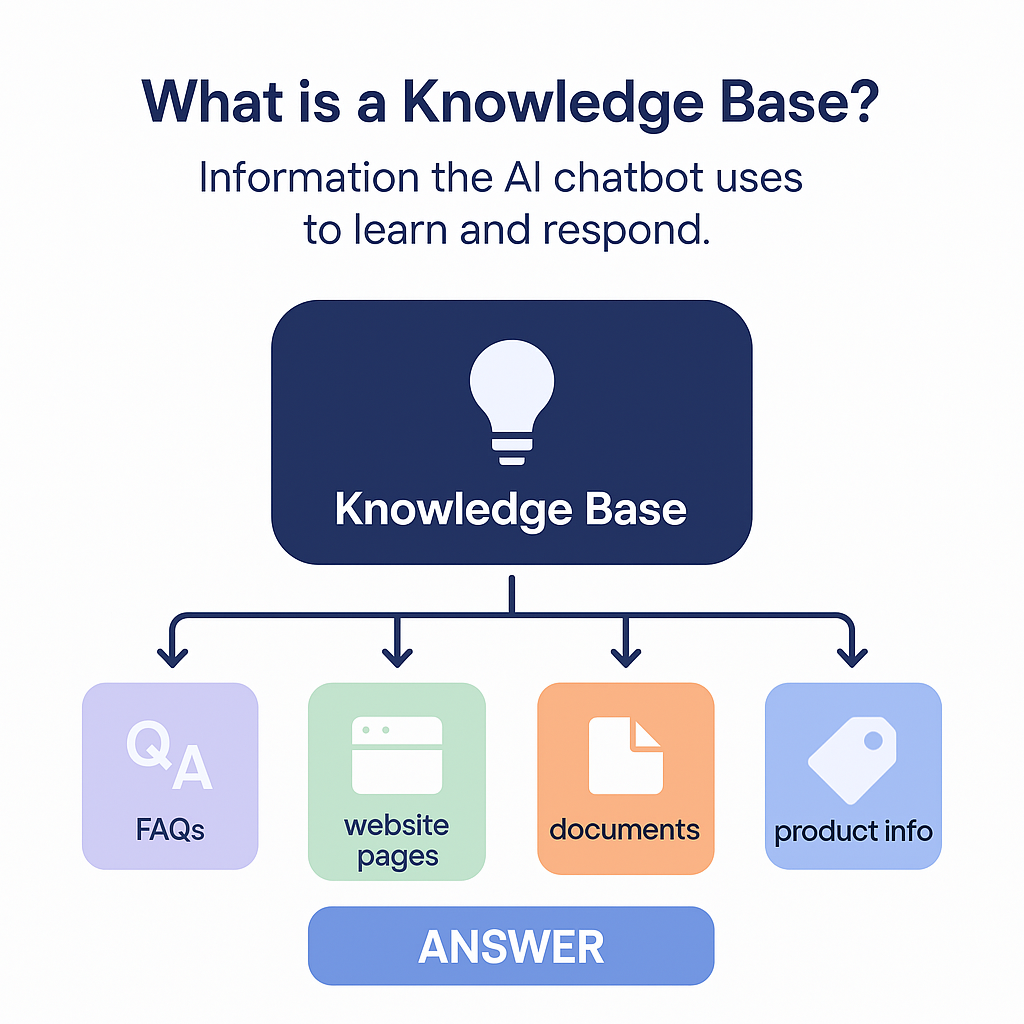
What can be a knowledge base?
Add Website Pages
2. Builds a Knowledge Base
3. Powers Conversational Responses
4. Automates Tasks
Benefits
- 24/7 support for your visitors
- Reduced workload for your team
- Faster response = higher conversions
- Better user experience
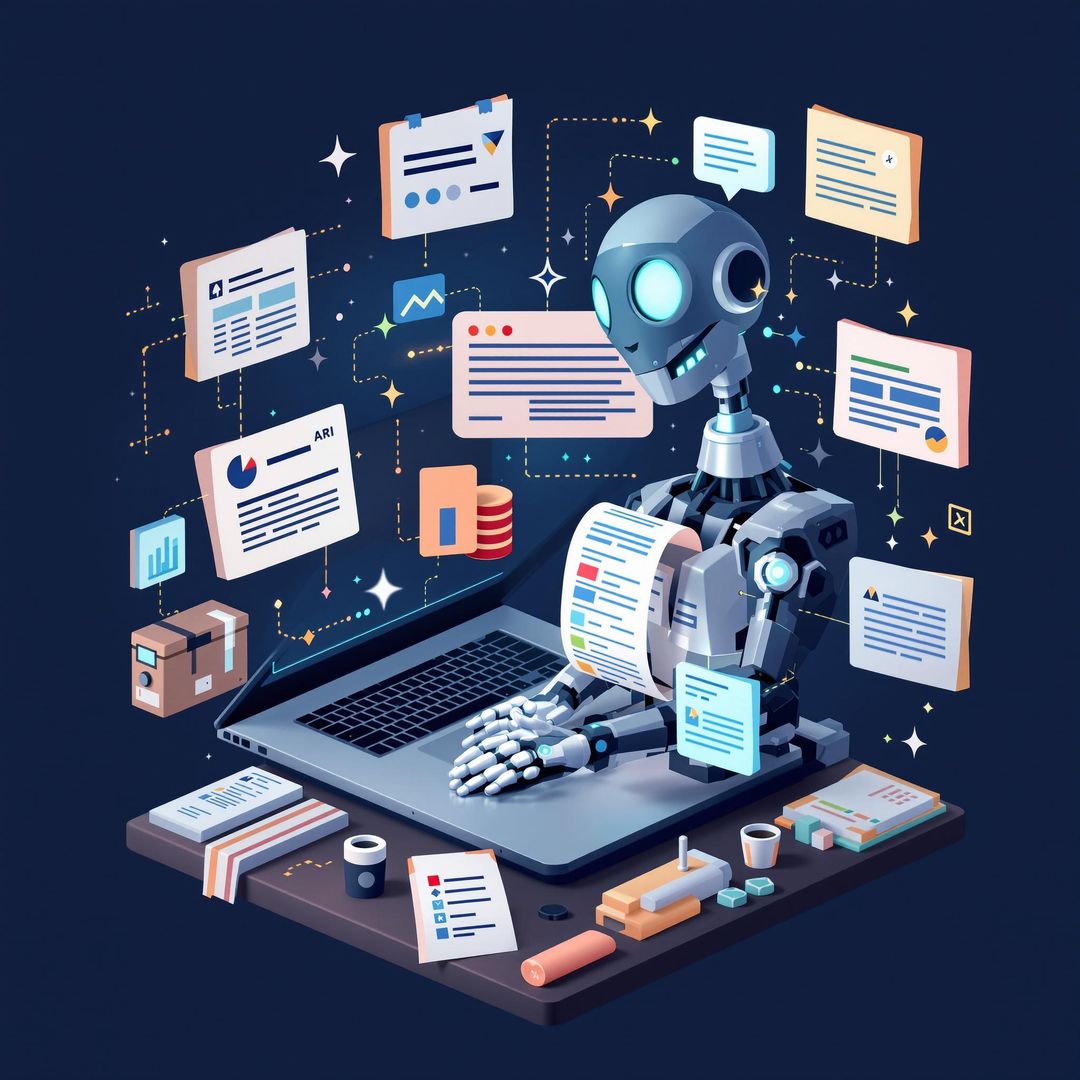
Types of documents and content formats that can be added to train or enhance an AI chatbot’s knowledge base
- FAQs – Frequently Asked Questions with answers
- Product Manuals – User guides, how-to documents
- Company Policies – Refund, return, privacy, and legal policies
- Service Descriptions – Details about services offered
- Terms & Conditions – Legal terms, disclaimers
- Knowledge Base Articles – Help center or support content
- Blog Posts – Informational or promotional blog content
- About Us / Company Profile – Brand values, mission, team info
- Case Studies – Real-world examples, success stories
- White Papers – In-depth expert content on a topic
- SOPs (Standard Operating Procedures) – Internal processes and workflows
- Training Manuals – Employee onboarding or user training documents
- Website Pages – URLs the bot can crawl and learn from (e.g. homepage, pricing, contact)
- Knowledge Base Portals – Zendesk, HelpDocs, or similar systems
- Online Product Catalogs – E-commerce descriptions, SKUs
- Spreadsheets – Pricing tables, contact lists, FAQs in table format
- CSV/JSON Files – Structured Q&A, data entries
- Chat Logs – Previous support interactions (with privacy considerations)
- Email Templates – Automated replies, support responses
- Scripts – Sales or customer service call scripts